
Sweepsteaks winner Sharon Chang, a project engineer at Group Pacific (Hawaii), Inc., is this month's winner of Building Industry magazine's "Sweepsteaks" drawing for a $100 gift card to Hy's Steak House. Chang, of Hawaii Kai, has been at Group Pacific for three years. The company provides project management and development services to developers, landowners, property managers and other project owners in Hawaii and the Pacific Rim.

PDC to Develop Maui's Puunene Shopping Center
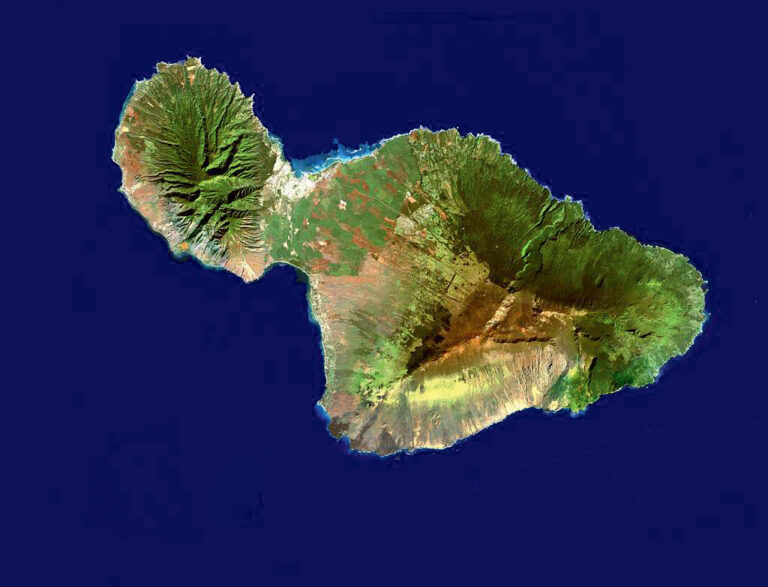
Property Development Centers (PDC), a wholly owned real estate subsidiary of Safeway Inc., announced it has reached an agreement to acquire from Alexander & Baldwin, Inc. a 24.45-acre site at Mokulele Highway and Hookele Street in Kahului to develop the Puunene Shopping Center.
PDC will in turn sell approximately 11.88 acres to Target, Inc., which will serve as the center's anchor retailer. In addition to Target, PDC is exploring leases with national and local companies, including mid-box retailers, specialty shops, restaurants, service providers and other businesses. The project is expected to generate 250 construction jobs and is expected to open in March 2015.
"This new retail center in the heart of Kahului's retail district is part of our ongoing commitment to provide new lifestyle shopping options for the Hawaii community," said David Zylstra, chief operating officer of PDC.
The shopping center will add approximately 275,000 square feet of retail space to the Kahului area. It will have approximately 1,425 parking stalls.
"We have been receiving positive interest from potential tenants who see the benefits of the center's convenient location in central Maui," said Wendell F. Brooks III, senior vice president for CBRE, which is handling the leasing and property acquisition for PDC.
HOT TOPIC
Group Builders Is Not Over
And Is Still A Big ProblemBy Karin Holma
April 9, 2013
In 2010, the Hawaii Intermediate Court of Appeals, in Group Builders v. Admiral Insurance, ruled that contractors had no insurance coverage for construction defects under their commercial general liability insurance policies. The ruling sent a shockwave through the construction industry. For years, contractors in Hawaii paid millions of dollars in premiums for this coverage. And they received it. At the same time as insurance carriers were reluctantly paying for construction defects, however, they were quietly fighting against it in the courtroom.
They finally got their way in 2010—in Hawaii at least. The ruling was contrary to:
> the understanding of the
insurance companies and brokers themselves> the evolution of insurance policies
> the expectations of the insureds, based on representations by
insurance companies and brokers, as well as prior claims handling.The ruling was also not consistent with the rulings in most other states that have considered the issue. In those states, courts have declined to bow to the insurance companies' flimsy arguments. (This means that the millions of dollars in premiums Hawaii contractors have paid flow out of Hawaii and into those states that have not so ruled, to pay plaintiffs in those states.)
The construction industry, the Hawaii Legislature and Gov. Neil Abercrombie reacted swiftly to the Group Builders ruling. Understanding that the construction industry is one of Hawaii's leading economic drivers, and that an uncovered catastrophic loss could mean the end of a contractor and numerous jobs, the Hawaii Legislature, in 2011, enacted HB 924, now known as Act 83. Act 83 requires courts to interpret the word "occurrence" in an insurance policy consistent with the law at the time the insurance policy is entered into, not later when the courts may have arbitrarily changed the law. While there has been criticism of Act 83, the Hawaii Legislature went as far as it could go without creating Constitutional problems and invading the rights of private citizens to contract as they want.
For some Hawaii courts, Act 83 made perfect sense. For example, Hawaii state court Judge Gary W.B. Chang ruled that Act 83 made the Group Builders decision moot. Similarly, Hawaii federal court Judge Alan Kay soundly rejected an insurance company's argument that the Group Builders decision did not change Hawaii law and that even before Group Builders, insurance carriers were not required to cover construction defects. Other Hawaii federal court judges have concluded differently, stating simply that Act 83 did not change anything and consequently ruling in favor of the insurance companies. The result is that there are now court rulings requiring insurance companies to provide coverage, and court rulings to the contrary.
Why is this still a problem? Obviously, for one thing, there is no insurance coverage for construction defects. This means that many homeowners, such as the homeowners in the Koolani condominium project, have a $10 million judgment that may not be paid and will have to pay the damages themselves. State and county taxpayers are also on the hook. If there is a catastrophic defect on a state or county construction project and no insurance coverage, guess who will foot that bill? It won't be the insurance companies that were paid mega-millions in insurance premiums.
Some have argued that this is a short-lived problem (of course, not short-lived where an owner/contractor faces a multimillion-dollar loss), because insurance companies began issuing endorsements after the Group Builders decision that ostensibly cover construction defects. Not all endorsements are the same, however, and some brokers are wondering if the new endorsements will really cover construction defects.
What is on the horizon? Attempts to have the Hawaii Supreme Court decide the issue, finally. The Hawaii Supreme Court may agree with the Intermediate Court of Appeals, or it may not. At least the construction industry will get a fair hearing on the issue. Which is really what this is all about.
Karin Holma is a partner with Bays Lung Rose & Holma, Attorneys at Law.